To Understand Morocco, Embrace Its Diversity
Every time I return to Morocco, I become more convinced that one of the country’s greatest treasures is its diversity.
You can feel it before anyone explains it to you.
In the height of summer, you may spend a night in Fez turning restlessly beneath the heat, unable to sleep without a fan or cooler. Yet after travelling only thirty kilometres toward Imouzzer, you may find yourself reaching for a blanket as the mountain air settles over the evening.
The distance is short, but the climate has changed.
The landscape has changed.
The rhythm of life has changed.
This contrast does not trouble us. It increases our admiration for the country.
Morocco reveals itself through differences: Atlantic coastlines and Saharan horizons, cedar forests and fertile plains, imperial cities and mountain villages, Arabic and Amazigh languages, Mediterranean influences and deep African roots.
To travel through Morocco is to move continually from one world into another, without ever leaving the same homeland.
A Country Formed by Many Rivers
Morocco, as we know it today, is not the creation of one people, one language, or one historical moment.
It is the result of a long civilizational journey.
The Amazigh peoples have lived upon this land since antiquity. With the arrival of Islam came profound spiritual, linguistic, political, and cultural transformations. Arab communities became part of the country’s human landscape. Andalusian families brought memories, music, craftsmanship, scholarship, cuisine, and architecture from across the Mediterranean.
African, Saharan, Jewish, Mediterranean, Arab, Amazigh, and European influences also contributed to the Morocco we recognise today.
These influences did not remain neatly separated.
They met.
They traded.
They argued.
They learned from one another.
They shared neighbourhoods, markets, farms, celebrations, hardships, and hopes. They intermarried, borrowed one another’s words, adopted one another’s customs, and gradually created a society in which identity could rarely be reduced to a single origin.
Morocco is not a collection of sealed compartments.
It is a confluence.
Like rivers meeting before continuing toward the sea, its many histories have flowed into one another.
The Illusion of Purity
People naturally wish to know where they come from. Understanding our ancestry can help us understand our families, our communities, and ourselves.
But knowledge of one’s origins should never become a claim of superiority.
No one chooses the family, ethnicity, region, or language into which they are born. These things can be loved and honoured, but they should not become reasons for contempt.
If ancestry alone produced greatness, civilizations would never rise or decline. History teaches us otherwise.
Nations are not built by the blood flowing through their veins, but by the ideas flowing through their minds, the values residing in their hearts, and the work carried out by their hands.
My own story has taught me this.
I come from Fez, where my family traditionally considered itself Arab and where Moroccan Arabic—Darija—was the language of everyday life. In the world in which I grew up, people often distinguished clearly between Arabs and Amazighs.
Yet our family’s life extended into the countryside of Mesdoura, Beni Sadden, and the surrounding villages. Even the name Mernissi connects us to the Rif and carries traces of Amazigh geography and language.
So where does one identity end and another begin?
After centuries of coexistence, migration, intermarriage, and cultural exchange, can any of us speak with certainty about complete ethnic purity?
Perhaps the more honest answer is that many Moroccans carry several Moroccos within them.
Languages That Belong to the Same Home
Arabic occupies a special spiritual place for Muslims because it is the language of the Qur’an, prayer, and many acts of worship.
But this religious importance should never be turned into ethnic nationalism or used to diminish Amazigh languages and cultures.
Love for Arabic does not require hostility toward Amazigh.
Pride in Amazigh identity does not require contempt for Arabic.
A language does not become more beautiful by silencing another language.
Each language carries a way of seeing the world. It holds memories, humour, poetry, family expressions, local knowledge, and ways of naming things that may not exist elsewhere.
When a language is respected, the people who speak it feel respected.
No Moroccan should feel like a stranger in their own country because of the language they inherited from their parents.
Arabic-speaking and Amazigh-speaking citizens alike deserve to communicate, learn, and conduct their affairs with dignity. Linguistic rights are not gifts granted by one community to another. They are part of justice and belonging.
But rights should bring people closer together, not become new walls separating them.
Identity Cannot Be Imposed
There is also a difference between ancestry and lived identity.
A person may discover Amazigh roots yet feel culturally closest to Arabic language and traditions. Another may come from a largely Arabic-speaking family yet choose to rediscover and embrace an Amazigh heritage.
Both should be free to do so.
No one should tell another person:
“You are Arab whether you accept it or not.”
Nor should anyone say:
“You are Amazigh whether you accept it or not.”
Identity is not merely something found in a historical document. It is also something lived through language, family, memory, affection, experience, and personal belonging.
We may discuss history, but we should not use history to imprison people inside identities they have not chosen.
What Comes After the Debate?
There is a simple question that should accompany every argument about ethnicity, ancestry, and language:
What comes next?
Suppose every historical dispute were resolved tomorrow. Suppose we agreed upon the origins of every tribe, family, dialect, and community.
Would that alone build better schools?
Would it create justice?
Would it protect the environment?
Would it provide meaningful work for young people?
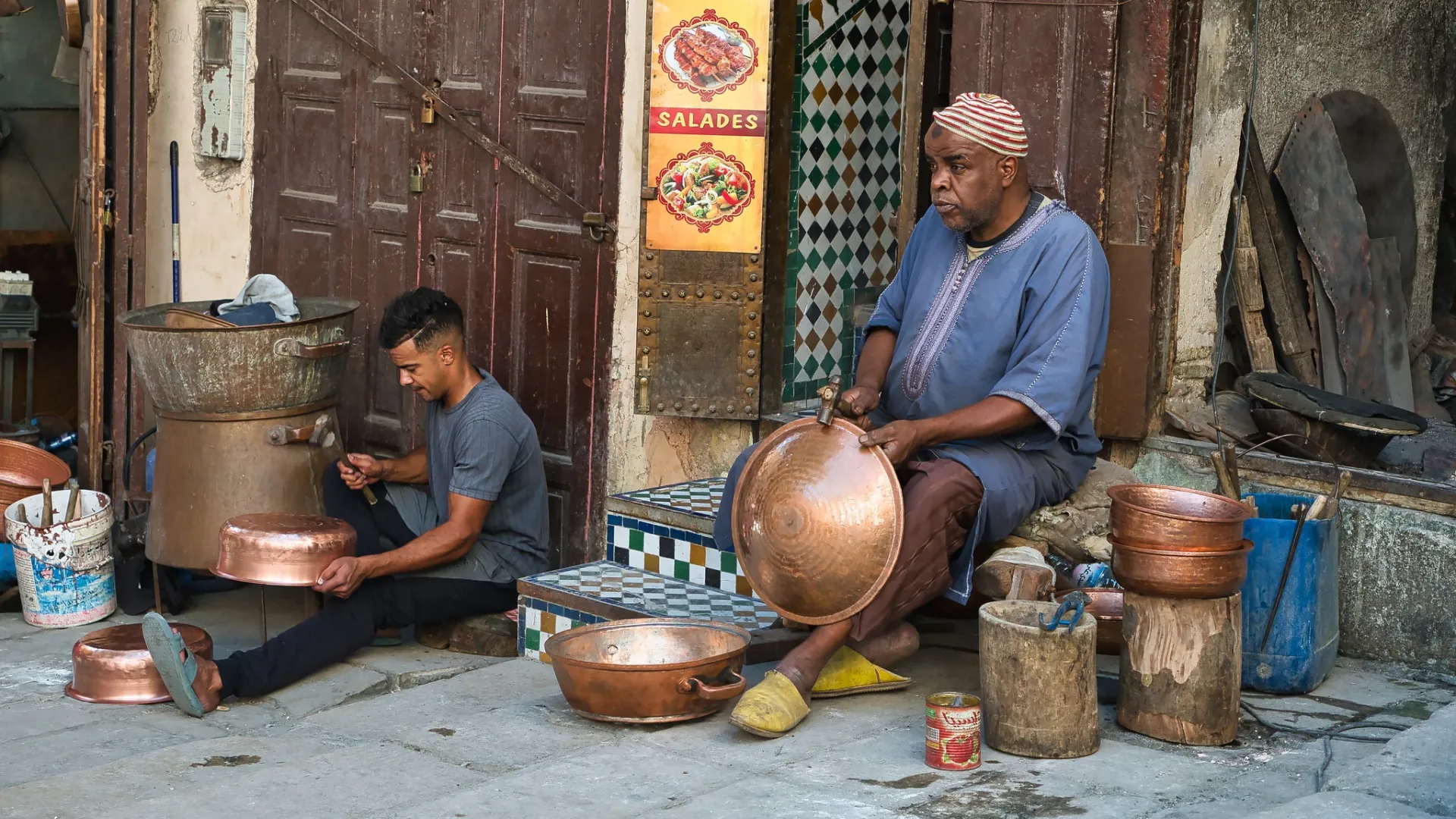
Would it strengthen rural communities or preserve the dignity of farmers, artisans, guides, musicians, and workers?
Nations do not rise merely because they settle arguments about the past.
They rise because they learn how to build a shared future.
They advance through knowledge, morality, justice, creativity, responsibility, and respect for human dignity. When most of a society’s energy is spent fighting over identity, children may inherit more disputes than achievements.
The past is important.
It gives us roots.
But roots exist to nourish the tree, not to prevent it from growing.
What Travel Can Teach Us
This question extends far beyond Morocco.
Every country contains differences—of ethnicity, language, religion, region, tribe, culture, class, or historical memory.
Travel places us directly before these differences.
A responsible traveller does not arrive merely to photograph buildings or collect destinations. Travel offers an opportunity to listen, to question assumptions, and to understand that a country is always more complex than the labels placed upon it.
This is one of the reasons we believe travel matters at Sarah Tours.
A journey should not reduce Morocco to camels, souks, palaces, or desert sunsets, beautiful as these may be. It should introduce travellers to the human relationships that hold the country together.
The traveller should encounter the Arab and Amazigh dimensions of Morocco not as opposing worlds, but as parts of a wider national story.
They should hear Darija, Tamazight, Tarifit, Tashelhit, Hassaniya, French, Spanish, and perhaps other languages spoken along the way—not as evidence of confusion, but as testimony to centuries of movement and exchange.
They should understand that diversity is not an obstacle to knowing Morocco.
Diversity is the way Morocco must be known.
Diversity as a Sign
The Qur’an presents human difference not as an error to be corrected, but as one of the signs through which creation becomes known:
“And among His signs is the creation of the heavens and the earth, and the diversity of your languages and your colours. Indeed, in that are signs for those of knowledge.” —Qur’an 30:22
The verse does not ask humanity to erase its differences.
It invites people of knowledge to contemplate them.
Our languages and colours are signs. Our responsibility is to ensure that these signs become opportunities for recognition rather than excuses for domination.
Diversity without justice can produce resentment.
Diversity without wisdom can be manipulated.
Diversity without mutual respect can be turned into division.
But diversity guided by justice, knowledge, and compassion becomes strength.
The Morocco We Leave Behind
Morocco does not need one of its components to triumph over another.
It does not need Arabic to defeat Amazigh, or Amazigh to defeat Arabic. It does not need one historical narrative to erase all others.
It needs every component to contribute to the country’s wellbeing.
Let communities compete in service, creativity, education, hospitality, environmental protection, and care for the vulnerable.
Let pride be measured not by who can speak most loudly about the past, but by who works most sincerely for the future.
Fifty years from now, our children may not care who won today’s arguments about ancestry.
They may ask us a more serious question:
What kind of Morocco did you leave behind?
Did we leave them a country exhausted by identity conflicts?
Or did we leave them a Morocco that transformed diversity into strength, difference into cooperation, and cultural inheritance into shared prosperity?
I fear for Morocco, but not because it is diverse.
I fear that we may fail to care wisely for that diversity and turn a blessing—one that God describes as a sign—into a source of division.
My hope is that Morocco will remain what it has long had the capacity to be:
A homeland spacious enough for everyone.
A country proud of all its roots without becoming imprisoned by any one of them.
A place where differences are not merely tolerated, but understood as part of the beauty of the whole.
For the traveller, this may be Morocco’s greatest lesson.
The country does not ask us to choose between the mountain and the desert, the Arab and the Amazigh, Africa and the Mediterranean, the ancient and the modern.
It asks us to see how all of them can inhabit the same landscape.
That is not a weakness.
That is Morocco.
By Hamid Mernissi All rights reserved