Morocco Today — Part One A Country Turning Inheritance into Possibility Twelve centuries of Moroccan statehood.
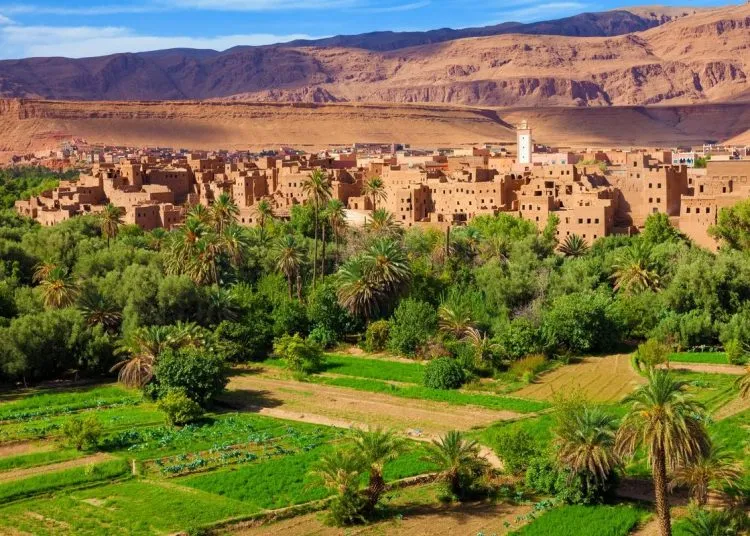
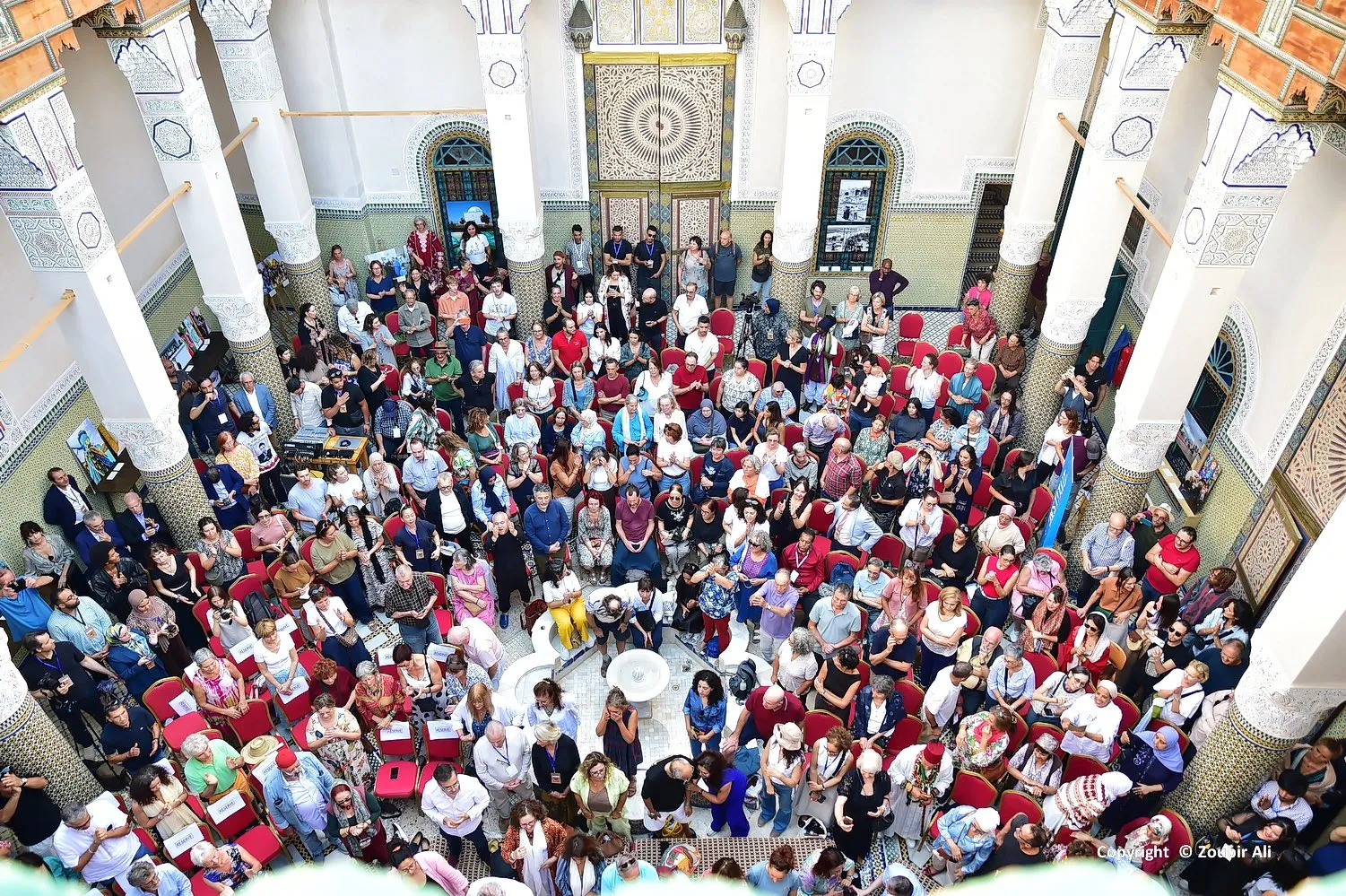
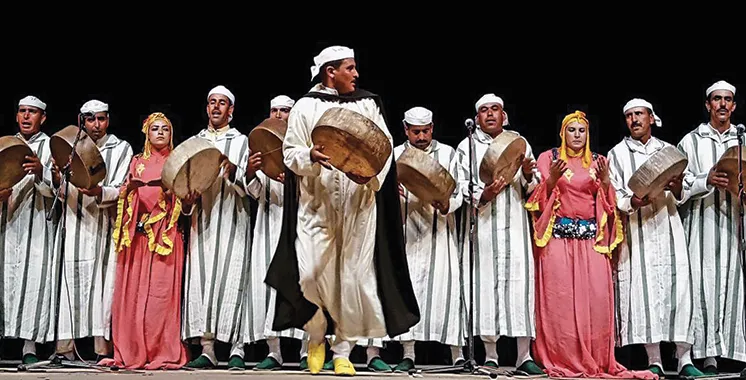
These three horizons, history, friendship, and possibility, help tell the story of Morocco today: a country deeply rooted in its inheritance, yet confident enough to reinvent itself. Under the leadership of His Majesty King Mohammed VI, history is not merely where Morocco rests. It is where Morocco begins. For the traveler, Morocco is often first encountered through its ancient medinas, imperial cities, sacred landscapes, music, craftsmanship, hospitality, and living traditions. These are among the country’s greatest treasures, and they remain essential to understanding its soul.
But Morocco cannot be understood only through its past. Beyond the walls of Fez, the palaces of Rabat, the souks of Marrakech, and the kasbahs of the south, another Morocco is taking shape: industrial, technological, environmentally ambitious, and increasingly connected to Africa and the wider world. It is a Morocco attempting to transform potential into value, and value into shared progress. From History to Industry The figures matter, but only because they reveal the direction in which the country is moving.
The 2025 Africa Industrialization Index, published by the African Development Bank in 2026, placed Morocco at the forefront of industrial development in Africa. The index evaluates countries across manufacturing performance, infrastructure, investment, labor, economic stability, and the environment in which industries can grow. This achievement did not appear overnight.
It is the result of years of investment in infrastructure, education, ports, logistics, industrial ecosystems, international partnerships, and a deliberate effort to connect Moroccan production with global supply chains.
The transformation is especially visible in the automotive industry. Morocco has become one of Africa’s principal automobile manufacturing and export centers, with production capacity approaching one million vehicles annually. Around factories in Tangier, Kenitra, and other industrial zones, entire ecosystems of suppliers, engineers, technicians, logistics companies, and training institutions have emerged. The aerospace sector has followed a similar path.
Morocco now hosts around 150 aerospace companies, producing components and providing specialized services for major international manufacturers. Plans to deepen the sector include work connected with next-generation aircraft engines, cabin equipment, and landing-gear manufacturing.
But numbers alone do not tell the full story. Behind every vehicle assembled, every aircraft component manufactured, and every container shipped is a human life: A worker acquiring new skills. An engineer developing expertise. A family gaining greater security. A young Moroccan beginning to imagine a future without having to leave home. Industry becomes meaningful when national progress enters the household. Preparing for the Industries of Tomorrow Morocco’s ambition is not limited to existing industries. The country is also investing in the production chains of the future, including electric vehicles, batteries, renewable energy, digital infrastructure, green hydrogen, and other technologies that will shape the coming decades. The development of an integrated battery industry is particularly significant. A country that manufactures automobiles must also prepare for the transition from combustion engines to electric mobility. By attracting investment in battery materials and production, Morocco is seeking not merely to participate in technological change, but to anticipate it. This is an important distinction. A country can wait for the future to arrive and then attempt to adapt. Or it can prepare its people, institutions, infrastructure, and industries before the transformation is complete. Morocco is attempting the second path. Confronting Water Scarcity Industrial development cannot be separated from the environmental realities facing the country.
Morocco is already experiencing the effects of climate change through prolonged drought, declining rainfall, pressure on groundwater, and increasing water scarcity. The response has included a substantial expansion of desalination capacity, alongside investment in water conservation, wastewater reuse, more efficient irrigation, and the gradual improvement of national water infrastructure.
Desalination is not a complete answer. It requires energy, investment, careful environmental management, and equitable distribution.
But for a water-stressed country with long Atlantic and Mediterranean coastlines, it has become an increasingly important part of national resilience. The challenge is not simply to produce more water. It is to develop a wiser relationship with water. Agriculture, tourism, urban development, industry, and household consumption must all become part of the same national conversation. Progress cannot be measured only by what Morocco builds, but also by how carefully it protects the natural resources upon which that progress depends.
Energy from the Sun and Wind
Morocco has also become widely recognized for its investments in renewable energy. Solar complexes, wind farms, hydropower installations, and emerging projects in green hydrogen and green ammonia are helping the country reduce its dependence on imported fossil fuels and prepare for a lower-carbon future.
The national objective is for renewable sources to represent 52 percent of installed electricity capacity by 2030. This ambition is both environmental and economic. Clean energy can help reduce emissions, strengthen energy security, support new industries, and make Moroccan products more competitive in markets that are increasingly concerned with the carbon footprint of production. Here again, the meaning extends beyond infrastructure. A solar complex is not merely a field of mirrors. A wind farm is not merely a row of turbines. They are signs of a country trying to reconcile development with responsibility. That reconciliation will not always be easy. Renewable-energy projects must respect landscapes, biodiversity, communities, and local livelihoods. Green development should not repeat the mistakes of older forms of development by ignoring the people who live closest to the land.
Sustainability is not achieved simply because a project is called green. It is achieved when environmental responsibility, economic value, and human dignity are protected together.
From Phosphate to Knowledge
Morocco possesses most of the world’s known phosphate reserves. For many countries, the possession of such a resource might encourage a simple economic model: extract it, export it, and depend upon it. Morocco has increasingly sought a different path. The greater value lies not only in the mineral itself, but in the knowledge added to it: fertilizer research, soil analysis, precision agriculture, customized products, farmer education, and solutions adapted to the needs of different crops and environments. This represents a larger national principle: Morocco must not merely export resources. It must create value. Through OCP and its agricultural programs, Morocco has expanded its engagement with farmers across Africa, linking fertilizer production with soil knowledge, agricultural training, and food-security initiatives.
This African dimension is essential.
Morocco’s progress should not be understood only as a national achievement. Its geography, history, and future place it within a continent where population growth, climate change, food security, employment, and industrialization will shape the lives of generations to come. The most meaningful form of leadership is not the ability to rise alone. It is the ability to create pathways through which others can rise as well.
Ports as Bridges
The story of Morocco’s transformation can also be seen at Tanger Med. Situated near the Strait of Gibraltar, the port has developed into one of the world’s significant logistics hubs. It connects Morocco with more than 180 ports and, in recent years, has handled more than ten million containers annually. Yet Tanger Med is more than a port.
It is a bridge between Africa and Europe, the Atlantic and the Mediterranean, national industry and international markets. Around it has grown a much larger industrial and logistical ecosystem. Vehicles, textiles, food products, aerospace components, and other Moroccan goods can move from factory to international market with increasing efficiency.
Further east, the development of Nador West Med is expected to add a new port, energy, logistics, and industrial capacity to the Mediterranean coast.
These ports reveal something important about Morocco’s contemporary vision. Geography alone does not create opportunity. Geography must be understood, connected, and served by infrastructure. Morocco has always stood at a crossroads. What is changing today is its ability to convert that crossroads into productive relationships.
What Do These Achievements Mean for the Traveler?
A traveler may reasonably ask: What do automobile factories, renewable-energy projects, fertilizer research, desalination plants, and container ports have to do with visiting Morocco? They have everything to do with understanding the country one is visiting. Travel should not freeze a destination in the past. Morocco is not a historical stage created for the visitor’s pleasure. It is a living country whose people are working, studying, inventing, building, questioning, and preparing for the future.
To admire an ancient medina while ignoring the aspirations of the young people who live beyond its walls is to see only half of Morocco.
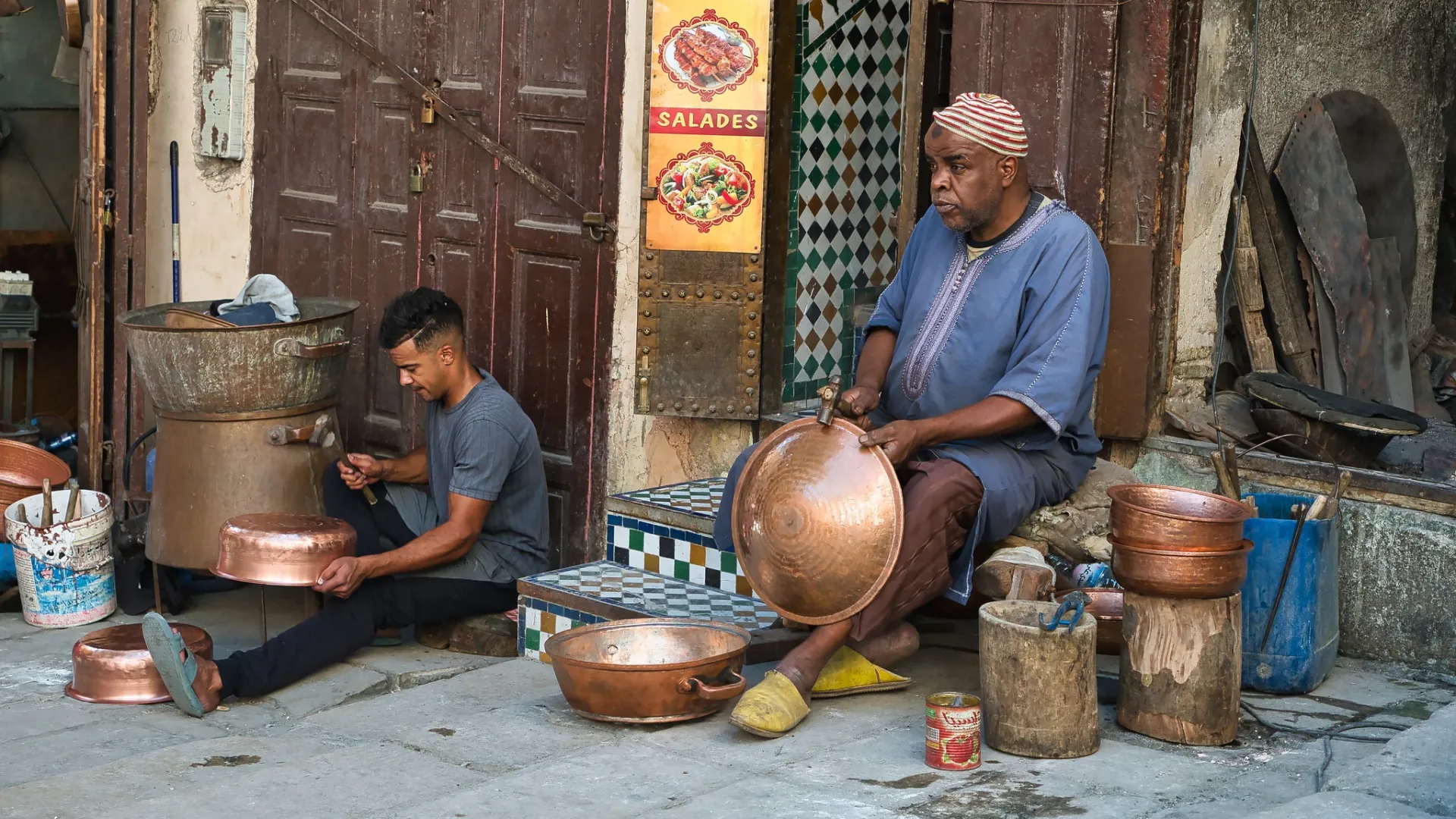
To photograph a traditional artisan while remaining indifferent to whether that artisan can earn a dignified living is to mistake appearance for understanding.
To praise the desert while ignoring water scarcity is to admire the landscape without listening to what it is telling us.
At Sarah Tours, we believe meaningful travel must bring the visitor into contact with both inheritance and change. The Morocco of the past gives the country its depth. The Morocco being built today gives it movement. And the relationship between the two gives it meaning.
Progress Must Be Shared
Industrialization, infrastructure, technology, and energy are not ends in themselves. Their value must ultimately be judged by the human lives they improve. Do they create dignified employment? Do they open opportunities for women and young people? Do they strengthen rural communities rather than emptying them? Do they protect water, soil, landscapes, and biodiversity? Do they allow artisans, farmers, small suppliers, and local enterprises to participate in national progress? Do they reduce inequality between regions? Do they deepen cooperation with Africa and with international partners such as Australia? These questions are not criticisms of progress. They are what give progress its moral direction. Morocco’s greatest opportunity is not merely to become more industrial, more connected, or more technologically advanced. It is to demonstrate that modernization can remain faithful to culture, that economic development can respect human dignity, and that national ambition can be joined to environmental responsibility. The task is not complete. No serious national transformation ever is. There remain difficulties, inequalities, environmental pressures, and legitimate questions about how the benefits of development are distributed. But Morocco today is no longer waiting for others to define its possibilities. It is building, experimenting, investing, learning, and looking forward. Twelve centuries of statehood have given Morocco roots. Morocco’s history is long. But its future has already begun.