Morocco Agriculture Study Tour
Need a custom quote?
Traveling with a large group or have specific requirements? Get a personalized quote for this 14-day tour.
Get a QuoteResponse within 24 hours
Group size
Min 8 · Max 28
Transport
Deluxe AC vehicles, bullet train
Overview
Morocco Agriculture Study Tour
Agriculture offers one of the most revealing ways to understand Morocco.
Across a relatively short distance, the country moves from the fertile plains of northern Morocco to the Middle and High Atlas Mountains, the irrigated valleys of the south, the agricultural landscapes of the Souss and Haouz, and finally the oases at the edge of the Sahara. Each environment asks farmers a different question.
What can be grown here, where will the water come from, and how can people make a living from this land?
The Morocco Agriculture Study Tour is designed for farmers, agricultural professionals, researchers, educators, students, agricultural organizations and travelers with a serious interest in food production, rural development and the relationship between people and the land.
Rather than observing Moroccan agriculture only from the road, we meet the people involved in it.
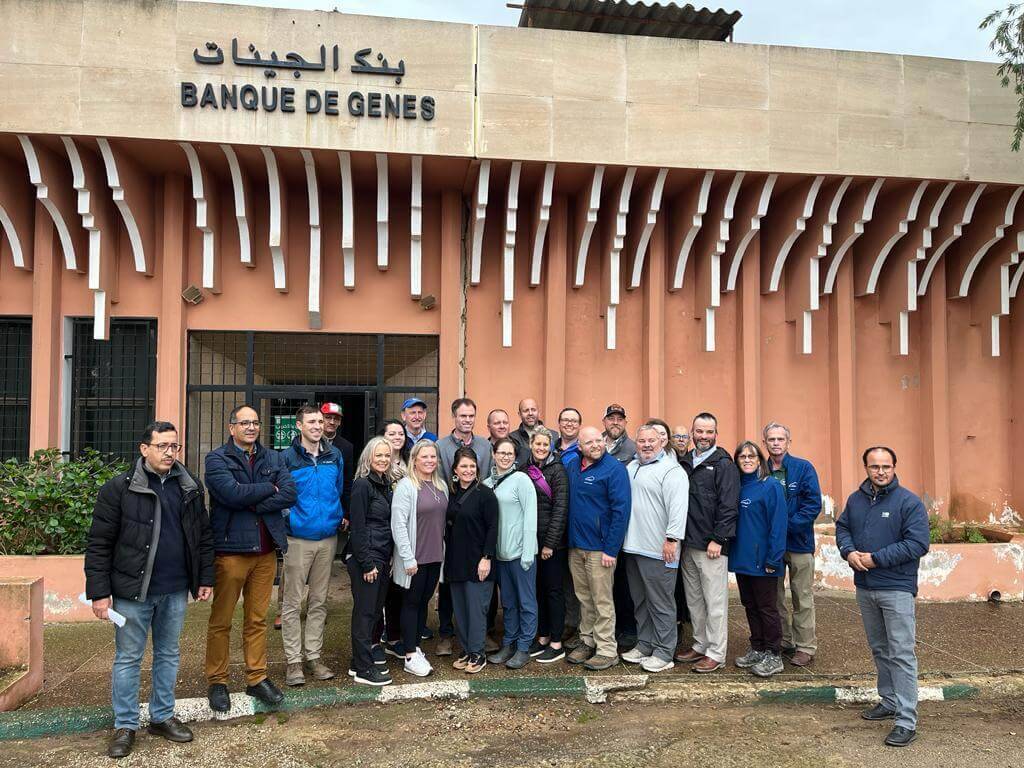
Depending on the interests of the group and the season, visits may include family farms, commercial agricultural operations, cooperatives, irrigation projects, agricultural institutions, research facilities, food producers and rural communities. Conversations with farmers and agricultural professionals allow us to examine both traditional knowledge and the technologies transforming Moroccan agriculture today.
Water inevitably becomes one of the central subjects of the journey.
In a country where rainfall, altitude and climate vary enormously from one region to another, agriculture has always depended upon careful management of water. Traditional irrigation systems, wells, mountain water, reservoirs and modern irrigation technologies reveal different responses to the same fundamental challenge: how to produce food where water cannot be taken for granted.
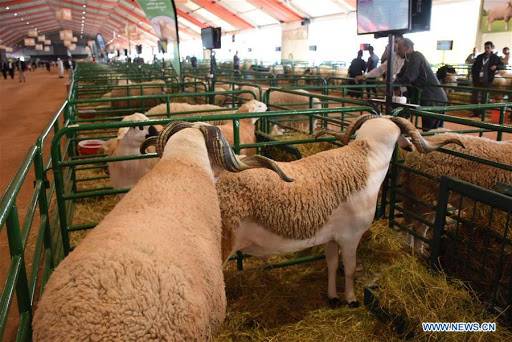
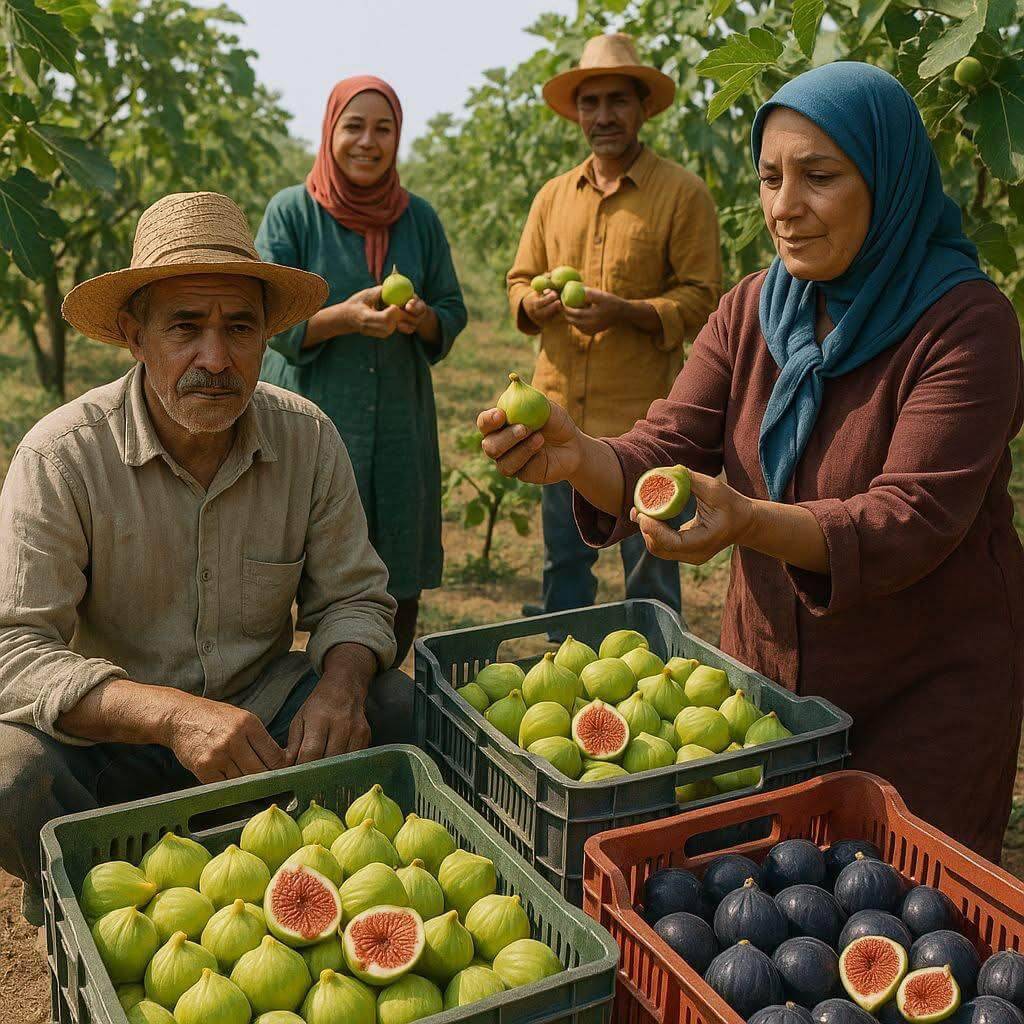
We also explore the diversity of Moroccan production—from cereals, olives and fruit orchards to vegetables, dates, livestock and regionally important crops—while examining how geography, soils, markets, labor and water influence agricultural decisions.
But agriculture cannot be understood only through crops and production figures.
A farm is also a household, a livelihood and part of a community.
For this reason, the journey considers the human side of Moroccan agriculture: family farming, cooperatives, the role of women in rural economies, relationships between traditional knowledge and modern agricultural practice, access to markets, changing rural communities and the pressures facing a new generation of farmers.
Morocco is also undergoing significant agricultural change. Visits and discussions can examine subjects such as efficient irrigation, greenhouse production, agricultural research, mechanization, renewable energy, export agriculture, soil management and efforts to produce more while placing less pressure on limited natural resources.
The study program is balanced with Morocco's history and culture. Fez, Rabat, Marrakech, the Atlas Mountains, oasis settlements and other places along the route help us understand that agriculture has never existed separately from Moroccan civilization. Markets developed around what the countryside produced. Water influenced where communities could grow. Trade connected farms with towns and ports. Food, architecture, crafts and even social relationships carry the imprint of the land.
This is therefore more than a tour of Moroccan farms.
It is a journey through the relationship between land, water and people.
And because every agricultural organization comes to Morocco with different questions, Sarah Tours can adapt the study program around the interests of the group—whether the focus is farming systems, water, horticulture, livestock, cooperatives, agricultural education, agribusiness, sustainability, rural development or a combination of these.
We begin by listening to what you want to understand.
Then we design the journey around it.
Itinerary
Casablanca Welcome to Morocco
Casablanca to Rabat Understanding Morocco's Agricultural Framework
Rabat Horticulture, Nurseries & Plant Production
Rabat to Fez Agricultural Education, Research & the Gharb Plain
Fez & Ain Kansara From City Markets to the Farmer
Meknes & Zerhoun Fruit, Vineyards & Olive Agriculture
Fez to Erfoud From Mountain Agriculture to Oasis Farming
Tafilalet & Merzouga Agriculture Where Water Defines Everything
Merzouga to Ouarzazate Following Agriculture Through the Oases
Ouarzazate to Marrakech Across the High Atlas
Marrakech & Ourika Valley Farming with Limited Water
Marrakech to Casablanca via Settat Farming with Rainfall
Casablanca From the Farm to the Market
Casablanca Departure
What's included
Highlights
- Meet Moroccan farmers, agricultural professionals and rural cooperatives
- Explore agriculture across Morocco's contrasting climatic and geographic regions
- Examine traditional and modern approaches to irrigation and water management
- Visit farms and agricultural operations selected around the group's professional interests
- Learn about crops, livestock, horticulture and food production in different regions
- Discuss sustainability, soil, water scarcity and changing agricultural practices
- Explore the role of women, families and cooperatives in rural economies
- Examine connections between agriculture, markets and rural development
- Experience Morocco's imperial cities, mountain landscapes, oases and Sahara
- Discover Moroccan food and culture through the agricultural landscapes that help produce them
- Personalize agricultural visits and professional meetings to the interests of your group
Customer reviews
Needs improvement
0 reviews
Guide
0Needs improvement
Transportation
0Needs improvement
Meals
0Needs improvement
Accommodation
0Needs improvement
No reviews yet.
Ready to experience Morocco Agriculture Study Tour?
Spaces are limited on every departure — secure yours from US $2,885.