From Framework to Model: Designing Region-Specific Rural Tourism in Morocco When something matters, it must be articulated fully. We have spoken of rural Morocco as the future of sustainable tourism. We have acknowledged its diversity, plains, plateaus, steppes, mountains, deserts, and oases, each with distinct ecological and social systems.
However, a framework alone is insufficient. If rural tourism is to become structurally sustainable, it must move from philosophy to a model.
Rural Morocco Requires Design, Not Expansion Rural tourism cannot be developed through replication. What works in a cedar forest region will not work in an arid plateau. What sustains an oasis will not necessarily sustain a mountain valley. Each region carries its own environmental limits, agricultural rhythms, architectural traditions, and community structures. A viable rural tourism model begins with one question: What does this specific region need to remain stable? Not: What can tourism extract? But: What can tourism reinforce?
The First Principle: Ecological Intelligence Every rural model must begin with ecological mapping. • What are the water resources? • What is the soil capacity? • What are the erosion risks? • What are seasonal constraints? • What is the carrying capacity of trails and landscapes? Tourism that ignores ecological thresholds accelerates degradation. Tourism that respects them strengthens resilience. Small group size is not a marketing choice. It is an ecological calculation.
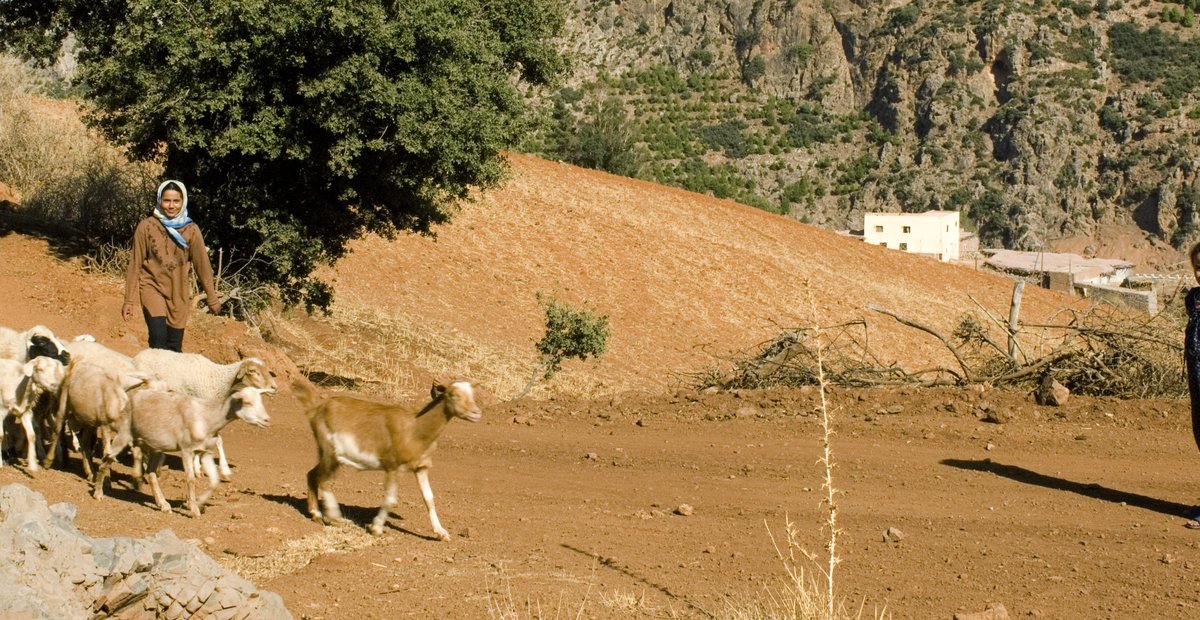
The Second Principle: Economic Circulation A region-specific model must define how money flows. • Who owns the accommodation? • Who supplies the food? • Who guides the experience? • Who maintains the infrastructure? • How much revenue remains within the region? If most of the value exits the region, tourism becomes extractive. If circulation remains local, tourism becomes complementary to existing livelihoods. Economic dignity is regional rather than centralized.
The Third Principle: Cultural Continuity Rural tourism must never replace culture with performance. A mountain village must remain a mountain village. An oasis must remain agriculturally viable. A pastoral region must preserve its seasonal rhythms. The role of tourism is to support continuity, not to stage authenticity. When youth see that traditional knowledge has economic relevance, transmission continues. When tourism overrides tradition, fragmentation follows.
The Fourth Principle: Architectural Coherence Infrastructure must reflect local materials, climate realities, and landscape integration. Concrete replication across regions erases identity. Region-specific design strengthens belonging. Building lightly is not an aesthetic preference. It is structural respect.
The Fifth Principle: Adaptive Governance Each rural model must incorporate: • visitor limits • seasonal pacing • waste management systems • water conservation strategies • community consultation Without adaptive governance, even well-designed models deteriorate. Design is not static. It evolves with monitoring.
From Theory to Practice A region-specific rural tourism model is not a luxury. It is a necessity for long-term national stability. Morocco’s geographic diversity allows for distributed development. If each rural region develops according to its ecological and cultural logic, tourism becomes horizontally balanced rather than vertically concentrated. This reduces pressure on urban hubs. It strengthens rural economies. It preserves environmental thresholds. It distributes opportunity.
Legacy as Structure A sustainable rural tourism model is not measured solely by aesthetic considerations. It is measured by its durability. If a region can: • host visitors without ecological strain • maintain agricultural productivity • retain youth through viable opportunity • preserve architectural coherence • circulate revenue locally Then tourism has reinforced rather than replaced the region. That is a legacy.
A Quiet Proposition Morocco does not need to replicate a single eco-project in every location. It needs regionally intelligent models that can be adapted, not copied. A framework becomes powerful only when it produces working examples. The future of Moroccan tourism lies not in expansion alone, but in design. And design begins locally.
By Hamid Mernissi Courtesy of Sarah Tours & Discoveries