A Tour or a Journey?
Two Ways of Discovering Morocco
When I began designing travel programs to Morocco in the early 1990s, I rarely thought of them as tours. I called them journeys.
Perhaps I did not fully understand at the time why that word felt so natural to me. I simply knew that I wanted travelers to encounter something beyond monuments, hotels and beautiful landscapes.
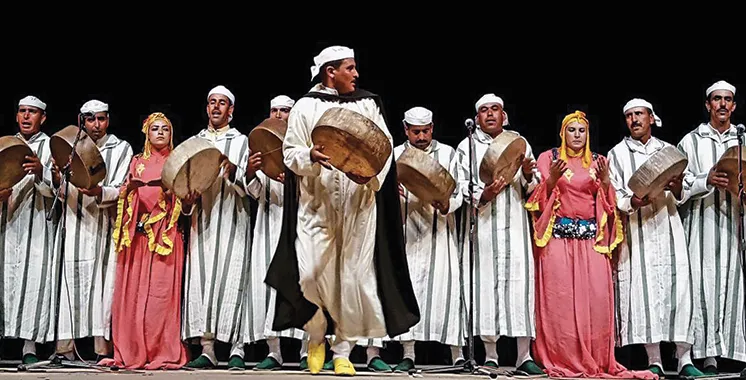
Some of my earliest programs were spiritual journeys. We explored Morocco through Sufi traditions, sacred music, and encounters with communities for whom spirituality was still woven into everyday life. Later, we traveled into Morocco's Jewish heritage, including visits connected with Hiloulas and the memory of saints whose resting places continue to bring people together.
The purpose was never simply to reach these places.
I wanted to understand what they meant.
More than thirty years later, I find myself returning to that word: journey. Not because there is anything wrong with a tour. There isn't.
A well-designed tour can be a wonderful way to discover Morocco. A first-time visitor may wish to experience Fez, Marrakech, the Sahara, the Atlas Mountains and Morocco's great historic sites while travelling comfortably and in knowledgeable hands.
We will continue designing such tours.
But another kind of traveler asks another kind of question.
They are not only asking:
Where are we going?
They are asking:
Why are we going there?
That small difference can change the entire travel experience.
A Tour Organizes Places. A Journey Organizes Meaning. A tour needs an itinerary.
So does a journey.
Both require good hotels, reliable transportation, knowledgeable guides, thoughtful logistics and careful planning.
The difference is not necessarily what appears on the map.
The difference is what connects the places.
A journey begins with an idea, a question, or sometimes simply a curiosity.
Imagine travelling through the mountains of southern Morocco.
We could visit villages because they are beautiful. We could photograph houses clinging dramatically to the slopes and continue along our road.
Or we could stop and ask: Why was the village built there? Suddenly the landscape begins to open.
Perhaps the flatter ground below was too valuable for agriculture to cover with houses. Perhaps water determined where people could settle. Perhaps building materials came directly from the mountain. Perhaps the architecture reflects climate, security, agriculture, and generations of accumulated knowledge.
The village has not changed.
We have.
We are no longer simply looking at it.
We are beginning to read it.
That is the territory of the journey.
Knowledge Gives the Journey Its Thread A journey cannot simply be assembled from attractive places.
It must be conceived.
The itinerary is not the journey. The idea running through it is.
On one journey, we might follow music through Morocco and discover how rhythm, spirituality, migration and community have shaped different musical traditions.
On another, we might follow water and discover how mountains, irrigation, agriculture, architecture and human cooperation are connected.
We might travel through the green highlands following olive, fig and cedar, allowing vegetation and altitude to tell us where we are.
Or we might enter the Anti-Atlas asking how Amazigh communities learned to make homes, farms and villages within an environment that does not give easily.
This kind of travel requires knowledge.
History matters.
Geography matters.
Anthropology matters.
Agriculture, architecture, religion, music and ecology matter.
But experience matters too.
You have to spend time in a place. You have to listen. You have to know when something belongs in the journey and, equally importantly, when it does not.
A journey has an author, but the traveler should never become a captive of the author's conclusions.
Our responsibility is to create the road, provide context, open doors when they can be opened respectfully, and ask worthwhile questions. We design the road.
We do not prescribe what you must find at the end of it.
Walking Is Sometimes Our Way of Getting Closer This philosophy also changes the pace of travel.
Sometimes we walk.
Not because every journey must become a trekking expedition, and certainly not because a mountain is waiting to be conquered.
We walk because the windshield separates us from things.
A terrace looks different when you stand beside the wall somebody built to hold its soil.
An irrigation channel becomes meaningful when you follow the water.
A market becomes different after you have visited the farms and villages whose produce arrives there.
A zawiya becomes more than architecture when you begin to understand why generations of people travelled to it.
Walking slows the traveler sufficiently for relationships to become visible.
Walking is how we get closer.
People Are Not Attractions Another responsibility comes with journey travel.
The people we encounter are not part of the scenery.
A shepherd does not exist for our photograph. A musician does not become more authentic because we have paid for a performance. A rural family should not have to demonstrate its culture because an itinerary promised travelers an “authentic encounter.”
Life has its own rhythm.
Pastoral life follows grass, water, weather, and season—not our itinerary.
If a conversation happens naturally, we welcome it. If a family opens its home, we enter gratefully. If music arises from an occasion to which we have genuinely been welcomed, we listen differently.
A meaningful journey requires curiosity, but it also requires humility.
We arrive as guests.
The Mountains Meet the Market One of the pleasures of journey travel is discovering relationships where we previously saw separate things.
A mountain village and a city souk may appear to belong to different worlds.
They don't. The farmer needs the market. The artisan needs materials. The merchant depends upon producers.
The city depends upon its countryside, while rural communities depend upon towns as places of exchange. Suddenly the souk is no longer merely colorful. It becomes a conversation between places.
Follow those relationships far enough and even a great city begins to look different.
After travelling through Amazigh villages, agricultural terraces, mountain passes and rural markets, we recently arrived at Marrakech with a simple realization: We had entered Morocco through the back door.
Instead of beginning with the city and making excursions into the countryside, we travelled through the countryside until we began to understand the city.
The mountains had entered Marrakech before us—in its food, materials, craftspeople, markets, water, histories and human relationships.
Tour or Journey? The Choice Is Yours. I do not believe that one way of travelling is better than the other. They are two different invitations. A tour says: Come, let us show you Morocco.
A journey says: Come, let us explore something about Morocco together.
Perhaps you are visiting Morocco for the first time and want to discover its great cities, landscapes and historic places. A thoughtfully designed tour may be exactly what you need.
Perhaps you have travelled extensively. You have seen many beautiful places already, and now you are looking for context, conversation, and a deeper understanding of the places through which you travel.
Then perhaps you are ready for a journey
We create our journeys especially for travelers who remain curious after seeing much of the world. They are not necessarily more difficult. They are not necessarily longer. They simply begin with a different intention.
Returning to Journeys After more than three decades in travel, Sarah Tours is returning to what was there from the beginning. We are bringing journeys back to the heart of what we do. Not as a new marketing expression. Not as a replacement for our tours. And certainly not because we wish to tell travelers how they ought to travel. We simply want to offer a choice.
Because I have come to believe that: A tour organizes places. A journey organizes meaning. A tour shows you where to go. A journey changes the way you see where you have been.
And perhaps most importantly: A tour can end at the airport. A journey sometimes begins there. Long after the suitcase has been unpacked, a question may remain. A piece of music may sound different. A market may remind you of the farmer behind it. A glass of water may bring back a mountain spring. A cedar tree, a zawiya, an old Jewish cemetery or a village clinging to the rock may suddenly connect with something you did not understand while standing in front of it.
The journey continues because something has travelled home with you. At Sarah Tours, we will continue to create both tours and journeys. The choice belongs to you.
Would you like us to show you Morocco? Or would you like to explore something about Morocco with us? One may become a wonderful tour. The other may become a journey. Travel in peace — Ma'a Salama.
By Hamid Mernissi